
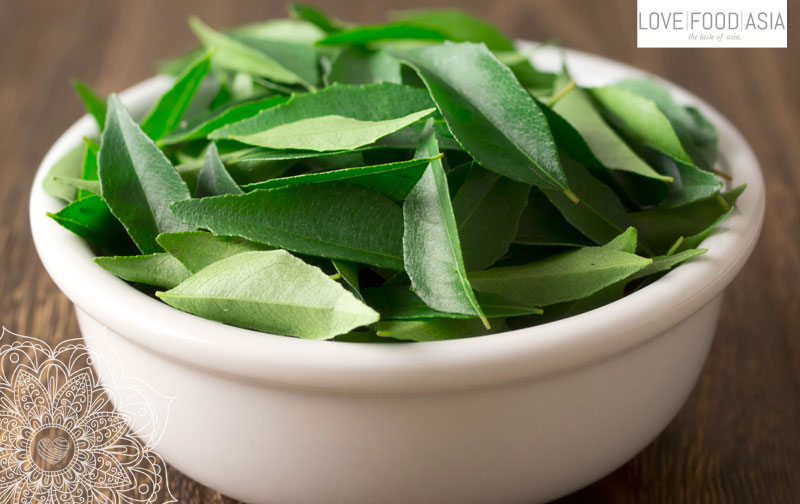
Curry Leaves (Murraya koenigii) – Aromatic Leaves of Asian Cuisine
Curry leaves grow on the Murraya koenigii tree, which is native to tropical and subtropical Asia, particularly the Indian subcontinent, Sri Lanka, as well as Nepal, Cambodia, Laos, Myanmar, Thailand, Vietnam, and China. The scientific name Murraya koenigii honors two European botanists: Johan Andreas Murray (genus) and Johann Gerhard König (species), who explored the flora of India in the 18th century.
Flavor and Culinary Uses
The leaves have a fresh, slightly fruity to smoky aroma. They are especially popular in South Indian and Sri Lankan cuisine. Because the leaves are thin, they do not need to be removed and can be eaten directly.
Curry leaves are often sautéed first in hot oil or ghee before adding other ingredients. They give dishes like fried paneer, lentil dishes (dal), or rice dishes with coconut and tamarind a distinctive flavor. Popular spice combinations include curry leaves with chili and black mustard seeds or with finely grated coconut, tamarind, and chili.
Curry leaf powder is also available in India – a spice made from leaves roasted in fat and crushed. It is less intense than fresh curry leaves but works well to flavor rice, parathas (stuffed flatbreads), and other dishes. Additionally, the leaves can be brewed as a tea.
About Murraya koenigii
The name Murraya koenigii is a botanical tribute: “Murraya” commemorates Johan Andreas Murray, a Swedish botanist, while “koenigii” honors Johann Gerhard König, who documented numerous plants in India. The curry tree is thus interesting not only culinarily but also historically.
Share Your Experience!
How do you use curry leaves? Comment, rate, and tag your photos on Instagram with #lovefoodasia. I look forward to seeing your creations and hearing your thoughts!